How to Sell Adjustable Bases Without the Hard Sell
Selling, 2026-11-09
The easiest way to sell an adjustable base is to stop pitching it. Run a demo instead. Get the customer lying down with the remote in their hand. Walk them through four or five positions in a set order. Let the base make the argument. Your job is to say out loud what they are feeling. Then answer the two objections that come up almost every time.
Below is a demo sequence you can teach any floor salesperson this week. It includes exact words for the price jump and for the customer who says, "I'll just get the mattress." The numbers here are examples. Change them to your own prices and margins.

Why does the demo beat the pitch?
Most customers have never spent five minutes on an adjustable base. They have seen one in a hotel room. Or a friend mentioned one. Talking about motors, massage settings and zero gravity means nothing yet. It means nothing until their own back is on the mattress and their feet are up.
So flip the order. Most salespeople show the base and then invite the customer to try it. Do the opposite. Put them on it first. A customer who has felt the difference starts asking you questions. A customer who is listening to a list of features is just waiting for you to finish so they can ask the price.
One practical note before you start. Pair the base with a mattress that actually works with it. Confirm how much weight the base holds and what the warranty covers too. That way you are not guessing in front of the customer.
What does the five-step demo sequence look like?
Keep it to about six to eight minutes. Hand over the remote early. After that, keep your hands off it.
- Flat first. Have them lie flat for a minute in their normal sleeping position. Ask, "How does your lower back feel right now?" You are getting a starting point to compare against.
- Head and feet up slightly. Raise the head about 15 to 20 degrees and the feet a little. Say, "This is the position most people fall asleep in on a couch. Notice your lower back."
- Legs elevated. Raise the foot section higher. Say, "This takes the load off your lower back and hips. Try to feel where your weight is landing now compared to a minute ago."
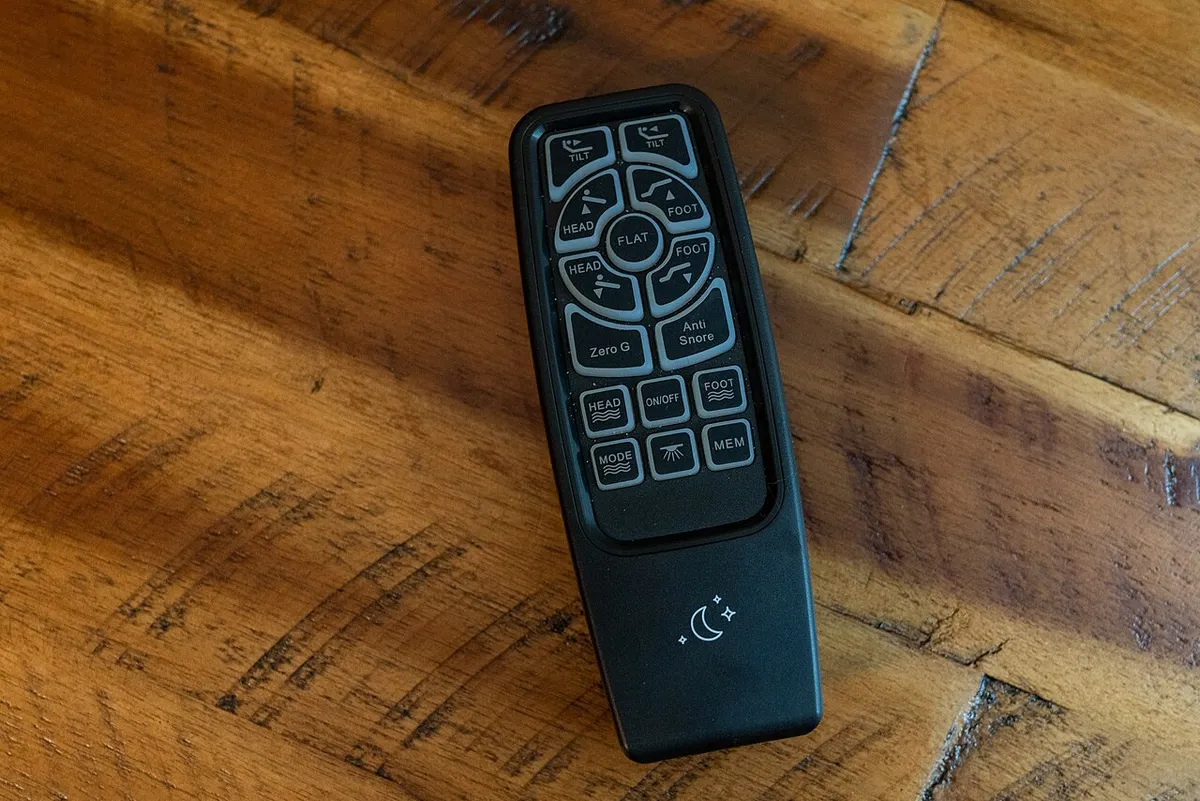
- Zero gravity or the reclined position. Most remotes have a preset button for this. Say, "This is the position people tend to stay in. Give it thirty seconds before you decide."
- Let them drive. Say, "Now try whatever you want. Find the position you would actually sleep in." Then stay quiet. This is the moment the sale usually happens.
When they sit up, ask one question: "Which position felt best?" Whatever they name, repeat it back. Then connect it to a benefit in their words, not yours. Say they liked the legs-up position because it helped their back. You say, "That is the one most people with lower back issues come back for." No statistics. No claims about medical results. Just what you see on your floor.
How do you handle the price jump without discounting?
The base usually costs less than the mattress. But it feels like the bigger decision because it is unfamiliar. Say the price gap out loud before the customer does.
Example words: "The mattress you liked is $1,299. The base adds $899, so you are at $2,198 for the set. I want to be straight with you about that jump. Here is what the $899 buys: the motor and frame, the wireless remote, and the warranty. Most people who try this demo and skip the base come back within a year or two. The ones who buy it usually say the same thing. They should have done it sooner."
Then stop talking. Let the quiet sit. If they push on price, talk about monthly payments. Do not cut the price of the base. Example: "Spread over 36 months, that $899 is about $25 a month. That is about the cost of one dinner out." Check your own payment plan terms and state them correctly. Do not quote rates you have not checked.
If they still hesitate, offer a smaller step instead of a discount. Offer a basic model at a lower price. Or sell the mattress now and let them add the base later, if the mattress works with a base. A lower model keeps the sale alive. A discount teaches the customer that the first price was not real.
What do you say when they say, "I'll just get the mattress"?
This is the most common pushback. Arguing against it makes people defensive. Agree first. Then ask a question that puts the decision back in their hands.
- Agree: "That is a fair call. Plenty of people start with just the mattress."
- Ask about the setup: "What are you putting it on at home, a box spring or a platform?" This brings up the real issue. Often they have not thought about what the mattress will sit on.
- Point out that it can be added later: "This mattress works on a flat foundation, so you can add the base later. Just know that the base needs a setup with no foundation, so you would swap out what it sits on at that point."
- Give a reason to decide now, without pressure: "The one thing I would say is that the demo is the best test you will get. If you are on the fence, it is usually cheaper to bundle now than to add it in six months. We would be delivering twice."
- Close on the mattress, then leave the door open: "Let's get the mattress handled. If you want, I will write the base model and price on your receipt so you have it."
About one in three of those customers will come back to the base during the same conversation if you leave the door open. Do not push. The ones who do not are still happy customers who send referrals. That is worth more than a forced add-on.
How do you set up the floor so the demo runs itself?
The demo only works if the base is easy to try. A few floor habits make a real difference in how often customers add a base:
- Keep at least one base paired with a popular mattress. Make it up with a pillow and a throw, so it looks like a bed and not a machine.
- Leave the remote on the mattress, not clipped to the frame. Customers pick it up when it is within reach.
- Put a small card at the foot of the bed with the base price and the model name. That way the price talk starts from a number, not a guess.
- Train every salesperson on the same sequence. If one person demos and another just describes, your add-on rate will swing wildly by shift.
Track base add-ons as a percentage of mattress sales by salesperson, not just store-wide. It is one of the few numbers that responds quickly to coaching. It also tells you who needs a refresher on the demo.
Key takeaways
- Put the customer on the base before you describe it. The demo sells. The features list does not.
- Run the same five-step sequence every time. Hand over the remote early.
- Say the price jump out loud. Then justify it with what the money buys, not with a discount.
- When you hear "I'll just get the mattress," agree. Ask about their foundation. Leave the base price on the receipt.
- Track the base add-on rate by salesperson so coaching goes where it is needed.